
A little local perspective
Worth knowing.
Worth going.
- Destination
- Jaipur, India
- The selection
- 8 hotels
- Your kind of trip
- architecture · couples · heritage · first visit
$$ to $$$$ — roughly 12,000-90,000 rupees a night, peaking November to February
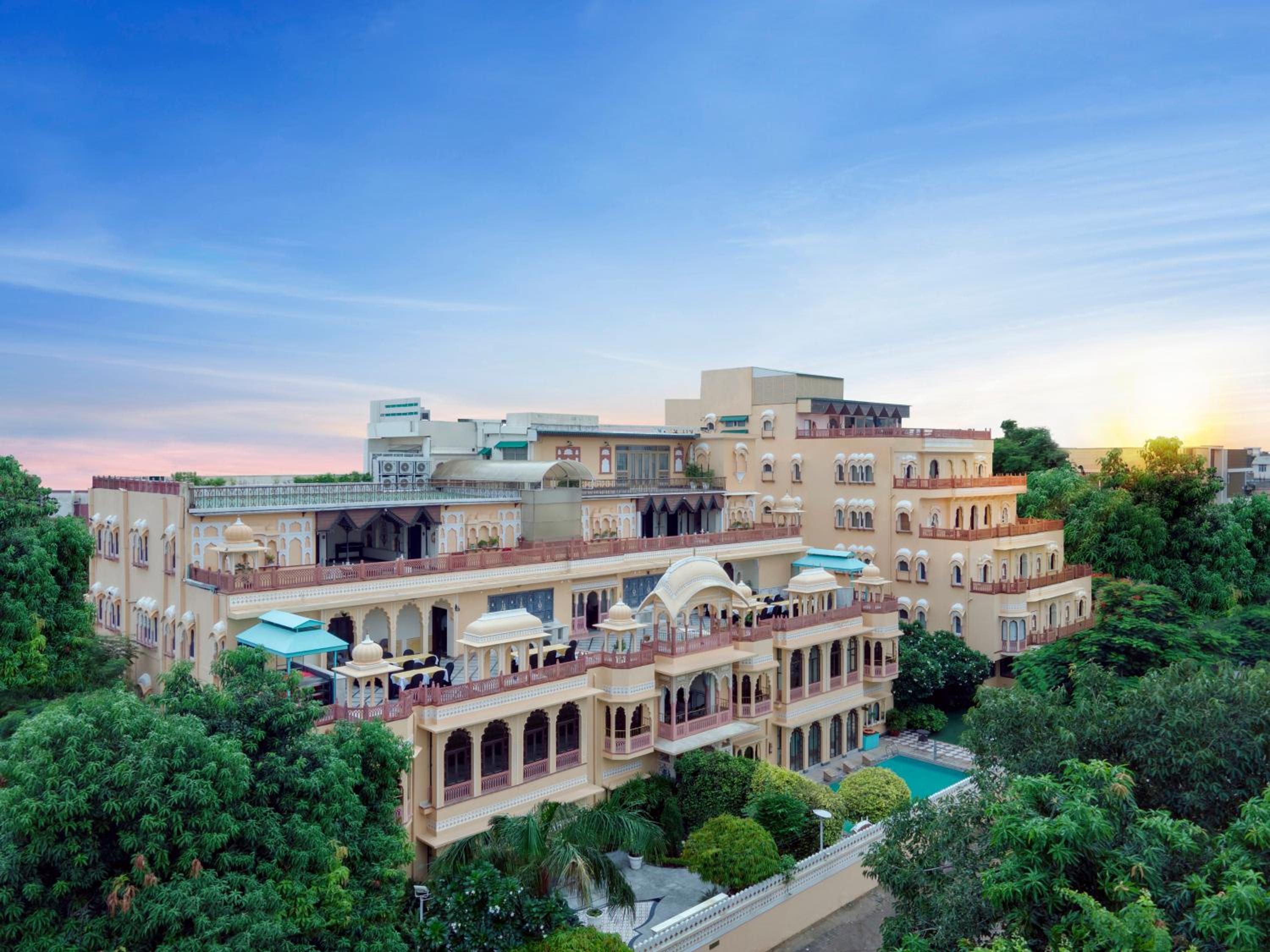
Rajasthan's princely states were formally dissolved in 1971 and their rulers lost their titles and privy purses. What many of them still had were enormous, unmaintainable palaces. A number of those families did the only viable thing and opened the doors, and the result is that Jaipur has a category of hotel that barely exists anywhere else: working palaces and havelis still owned and, in several cases, still lived in by the descendants of the people who built them.
That is a genuinely different proposition from a heritage-styled new build, and the two are easy to confuse from a booking page.
What the distinction actually gives you
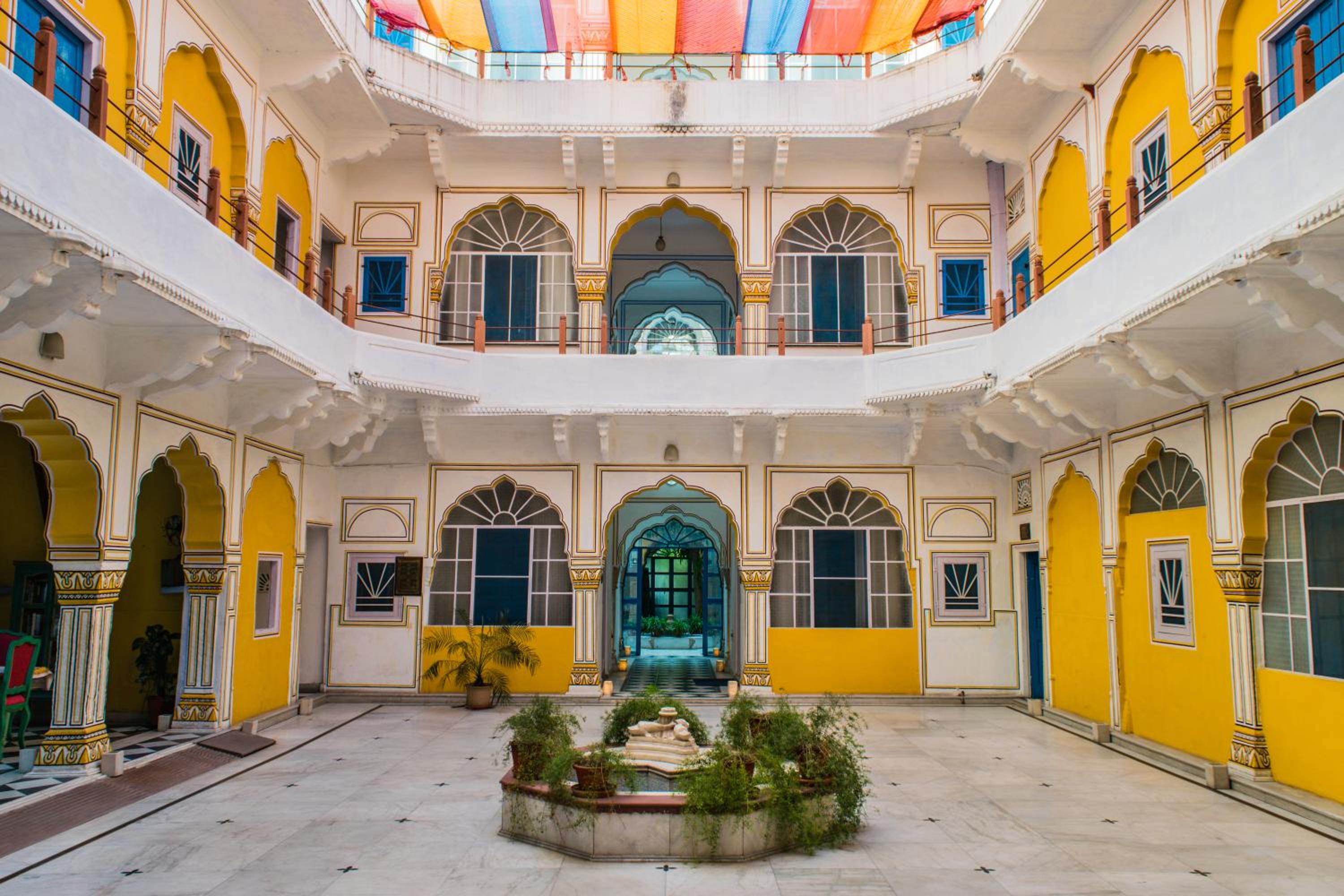
Three things. The buildings are real, which means courtyards, chhatris, marble inlay and frescoes that were commissioned rather than commissioned to look old. The scale is domestic in places and enormous in others, because these were homes rather than hotels, and the room layouts are consequently irregular in ways a modern hotel would never permit.
And the families are frequently present. At several of the properties below a member of the household is around, the staff have worked for the family across generations, and the history in the photographs on the wall is the household's own.
The trade is consistency. Rooms in a genuine haveli vary enormously, plumbing in a two-hundred-year-old building is what it is, and some of the grandeur is faded rather than restored. If you want a uniform five-star room, book a modern property.
The nine below are grouped by scale.
The great palaces
Full royal residences, still owned by or associated with the families, running as hotels.
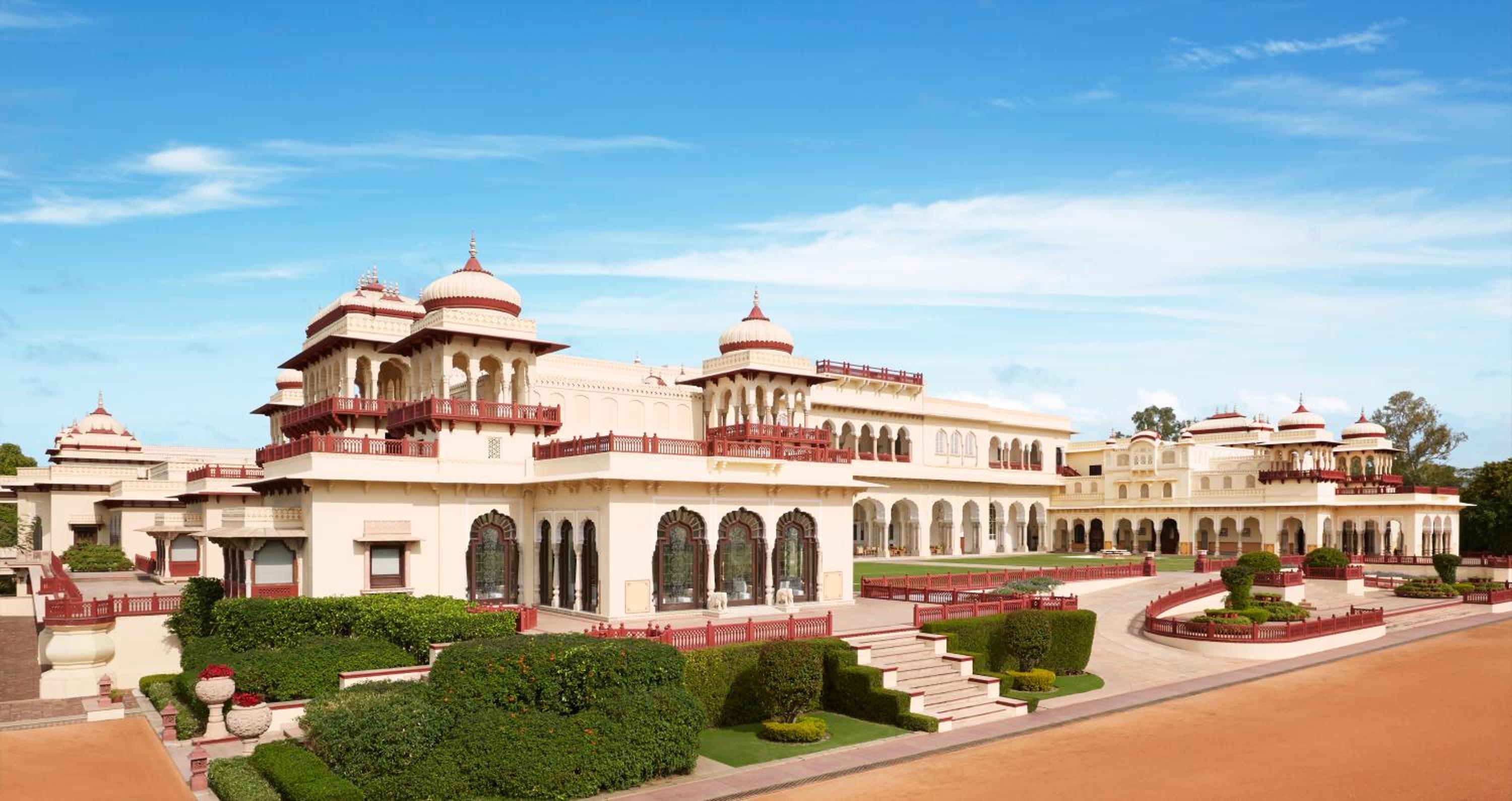
Rambagh Palace was the Maharaja's residence until the 1950s and remains the finest hotel in India: forty-seven acres of gardens, peacocks, marble corridors and a level of service that is unmatched on the subcontinent. Book a historical suite rather than a palace room if the budget allows; the difference is substantial.
SUJAN Rajmahal Palace was the royal guest house where visiting heads of state stayed, and it is smaller, more idiosyncratic and considerably more colourful than its grander neighbour, with a wallpapered interior that has become famous in its own right.
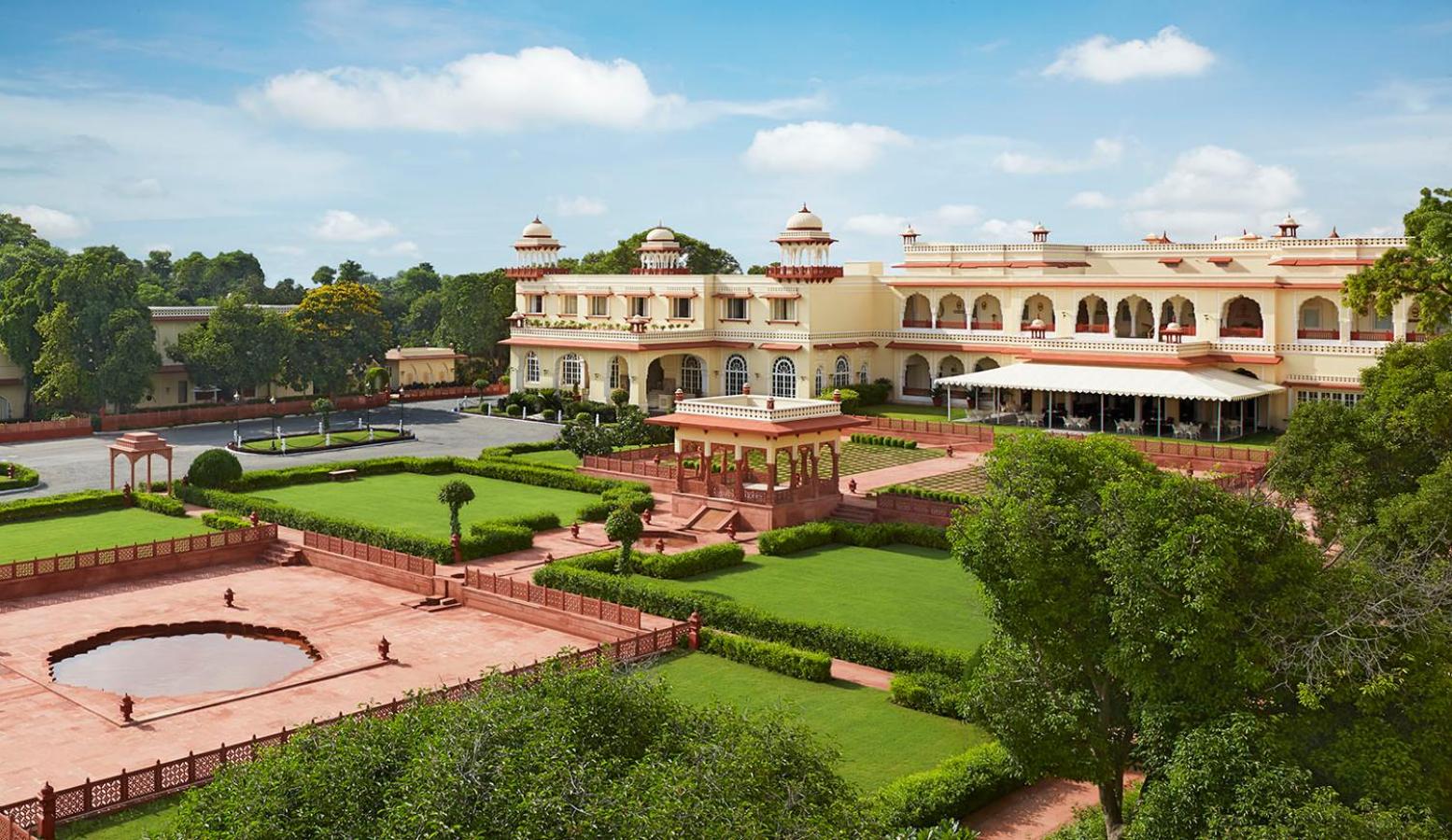
Jai Mahal Palace occupies an eighteenth-century palace set in eighteen acres of Mughal gardens near the old city, with a large pool and the most family-friendly grounds of the palaces.
The havelis
Smaller noble townhouses in and around the old city, most still family-run.
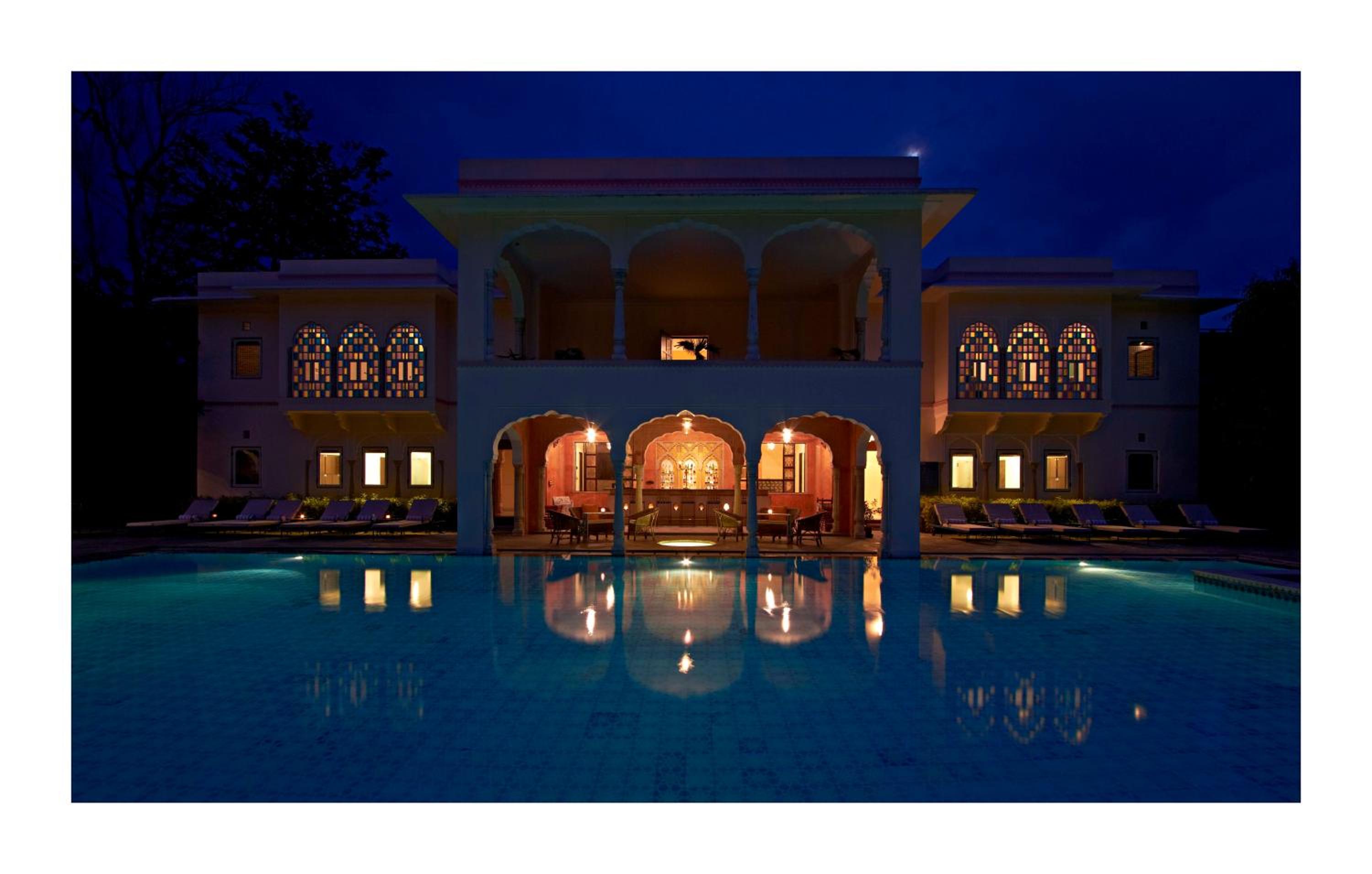
Samode Haveli is a five-hundred-year-old family haveli with painted rooms, a courtyard and a pool in the garden, run by descendants of the original household. It is the best-value genuine heritage stay in Jaipur.
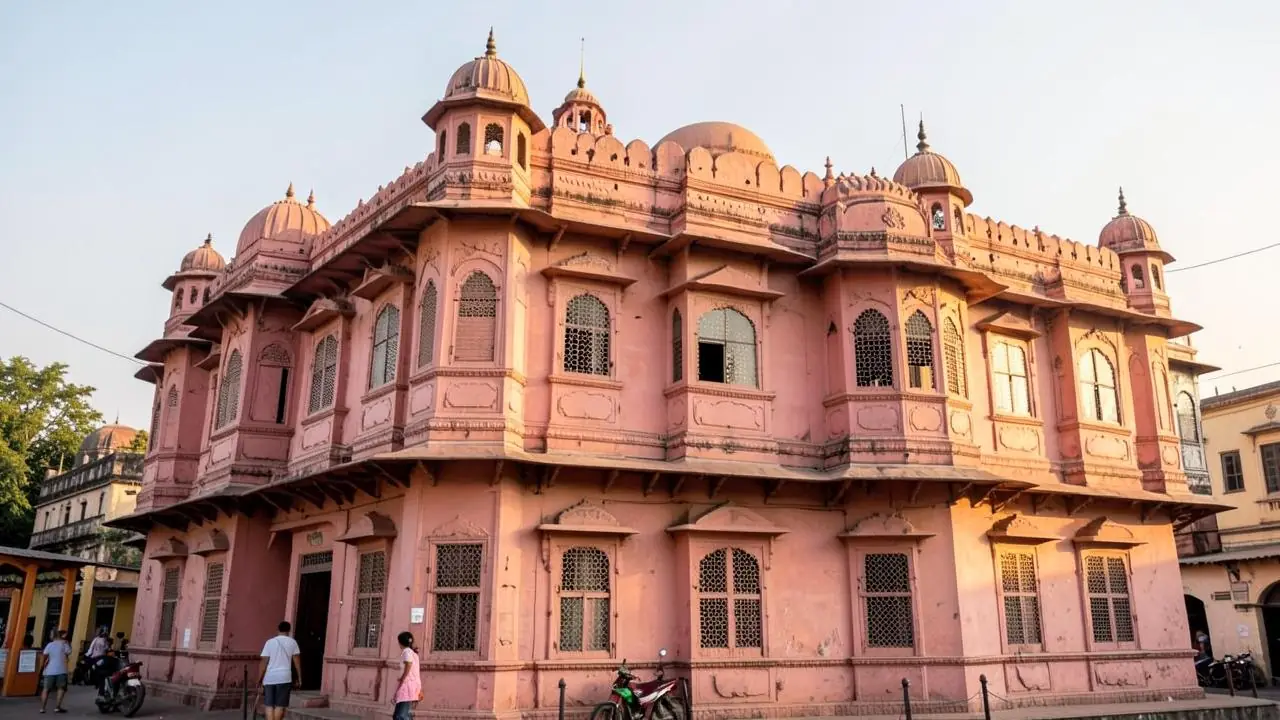
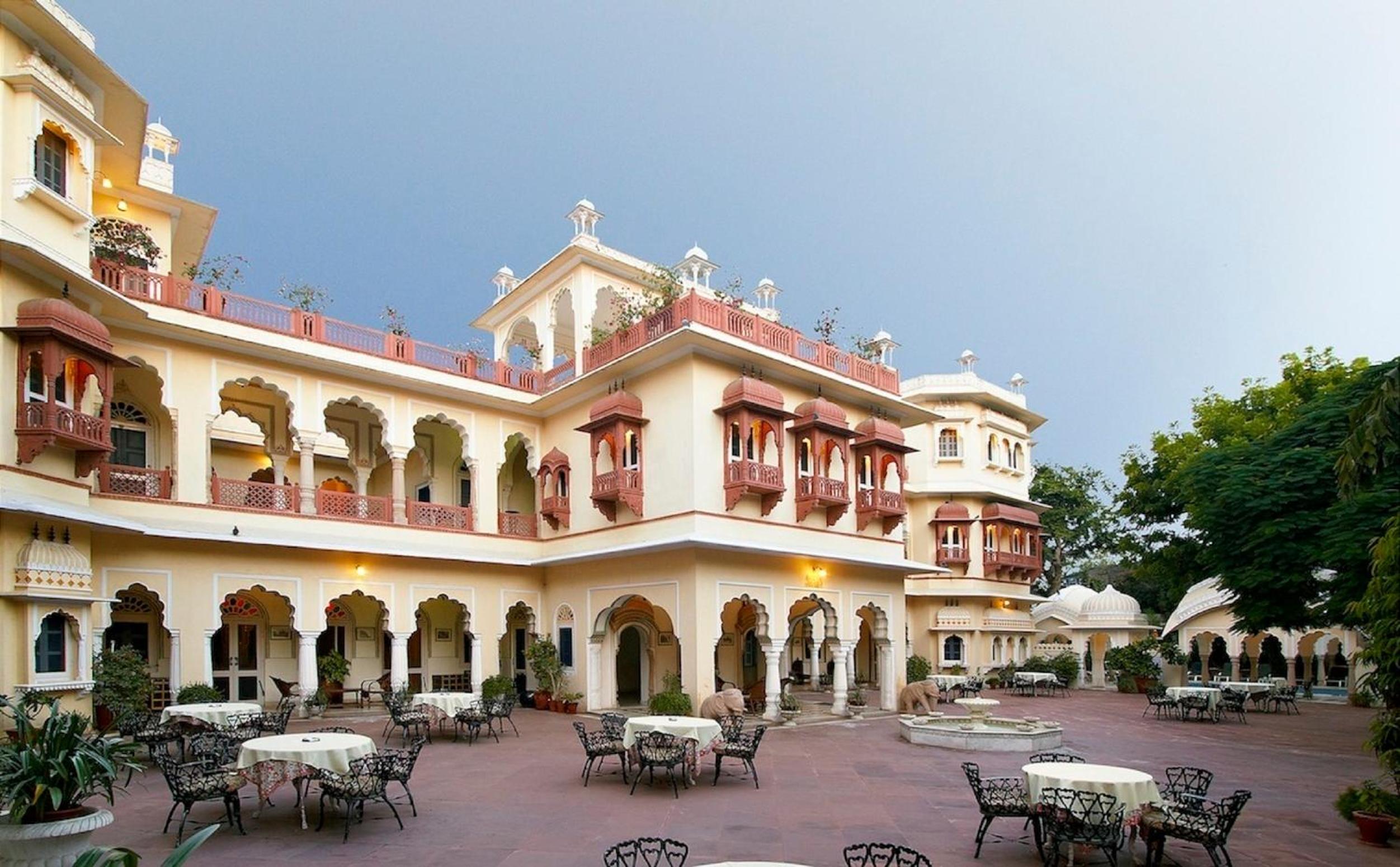
Alsisar Haveli occupies a nineteenth-century haveli with frescoed rooms around two courtyards and a rooftop restaurant. It is the most atmospheric building on this list and the least polished.
Narain Niwas Palace sits south of the walled city in a 1928 family residence with a garden, a pool and a long verandah, and it is the most relaxed of the heritage properties.
Shahpura House is a converted family home near the old city with painted interiors, a courtyard pool and a small operation. It is the quietest of the havelis.
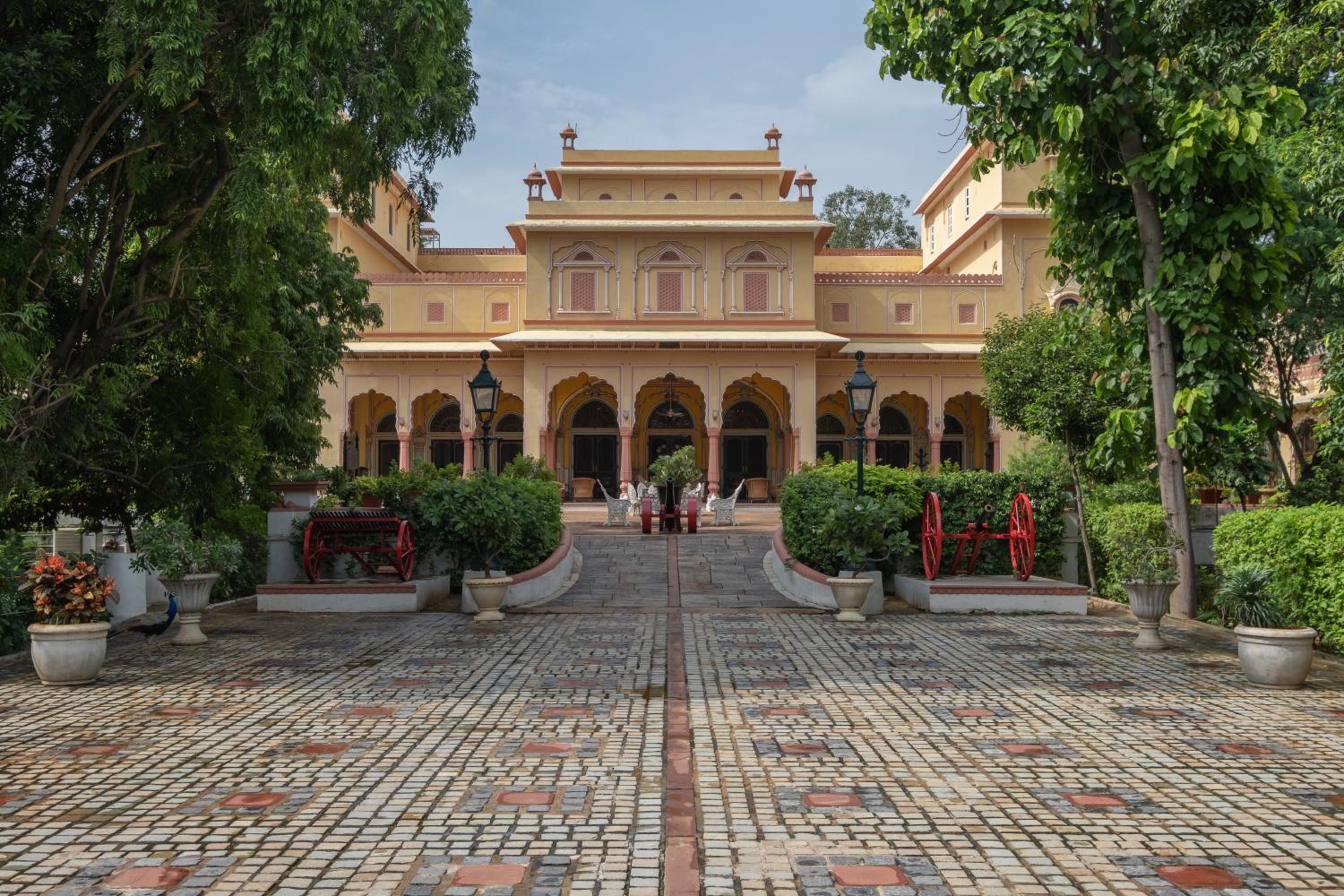
Hotel Diggi Palace occupies a 1860s residence with a garden, a good restaurant and one of the lower rates on this list. It has been in the same family throughout.
The modern interpretation
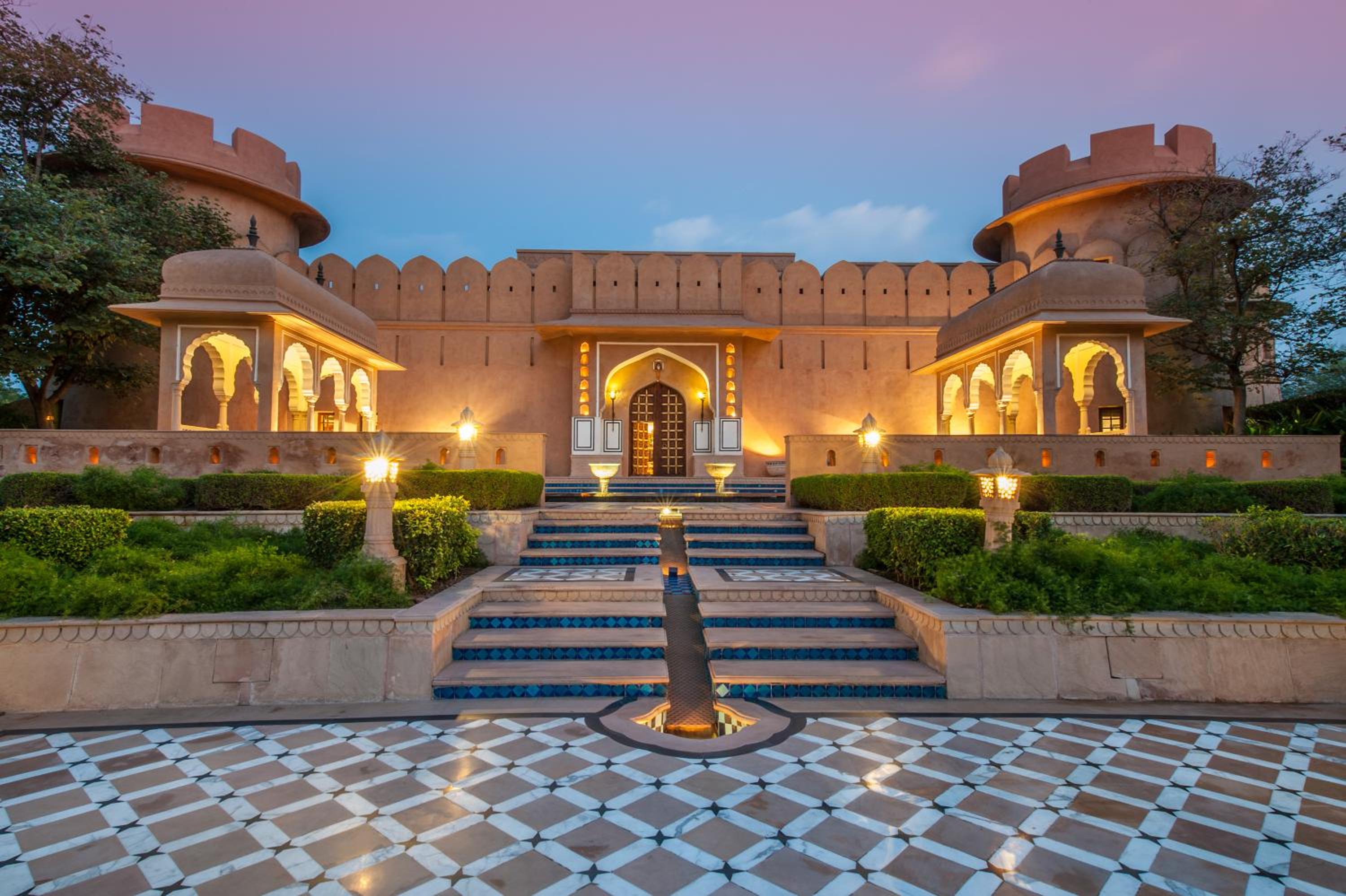
The Oberoi Rajvilas is not a palace and belongs here anyway: a purpose-built fort-style property in thirty-two acres of gardens with a restored 280-year-old temple in the grounds, and the most consistent luxury rooms in Rajasthan. It is what you book when the plumbing matters more than the provenance.
What we have left off
The chain hotels along the Jaipur ring road are excluded. They have the newest rooms, the largest gyms and the most reliable air conditioning in the city, and staying in one means visiting Jaipur's architecture rather than sleeping inside it, which is the entire reason to come here rather than anywhere else.
What to do
Amber Fort at opening, before the coaches and the heat, and walk up rather than taking an elephant. The Jaigarh fort above it holds the world's largest wheeled cannon and almost no visitors.
The City Palace is still partly a royal residence and the Chandra Mahal section can be visited separately. The Jantar Mantar observatory next door is a set of enormous stone instruments that still work.
Hawa Mahal is a facade rather than a building and is best photographed from the cafe opposite in the early morning.
Shop properly. Jaipur is the centre of block printing, blue pottery, gemstone cutting and hand-knotted textiles, and the workshops in Sanganer and Bagru take a morning.
Eat laal maas and dal baati churma, and drink a lassi at a counter in the old city.
Practical notes
Jaipur's airport is 20 minutes from the centre with domestic connections; Delhi is four hours by road or five by train, and the three cities of the golden triangle work as a loop.
October to March is the season, dry and warm by day and cold at night in December and January. April to June exceeds 40 degrees and is genuinely hard. July to September is the monsoon, which is green and much cheaper.
Hire a car and driver for the day; it is inexpensive and it removes every negotiation.
Explore 4 & 5 Star Jaipur Hotels
Prices shown are sample rates from upcoming dates — not quotes for specific dates. Open a hotel and choose your own dates and guests to see the exact price.
Questions people actually ask
Are the heritage properties as comfortable as a modern hotel?
Not uniformly. Rooms vary, plumbing is older and some rooms are dark. That is the trade for sleeping in the real thing.
How many nights does Jaipur need?
Two, three if you want the forts unhurried and a shopping morning.
Is it worth staying inside the walled city?
The havelis just outside the walls are the better answer: minutes from the old city and considerably quieter than being in it.
Best time to go?
November to February. December nights are cold enough for a jacket, which surprises people.