
A little local perspective
Worth knowing.
Worth going.
- Destination
- Venice, Italy
- The selection
- 5 hotels
- Your kind of trip
- couples · special occasion · architecture · first visit
$$$$ — roughly 600-1,800 euros a night for a canal-facing room
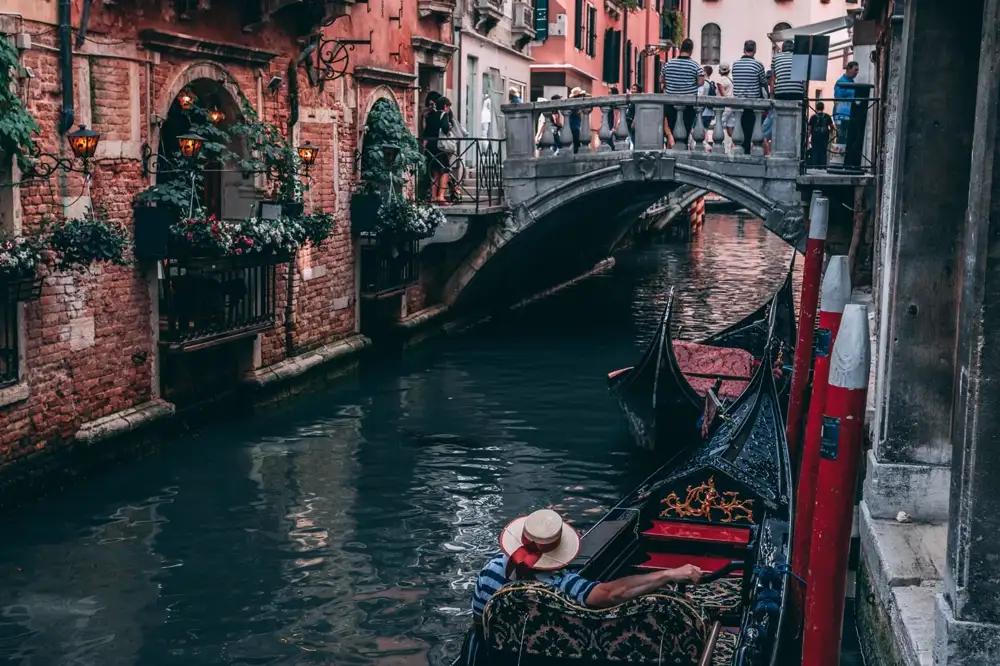
Venice charges a tax that nobody mentions in the brochure, and it is paid in luggage. The city has more than four hundred bridges, almost all of them stepped, and no wheeled vehicle of any kind. The standard arrival involves a vaporetto, a crowded pontoon, and then eight minutes of hauling a suitcase up and over three humpbacked bridges in the heat while a queue of people waits behind you.
There is an alternative, and it is architectural rather than commercial. The palazzi built along the canals were designed to be entered from the water. The ground-floor arch with steps running down into the canal is a porta d'acqua, a water door, and the hotels that still use theirs will collect you from the airport by launch and put you down inside the building. No bridges, no pontoon, no walking.
Why the water door changes the whole trip
It is not only about arrival day. A hotel with a working water entrance has a jetty, and a jetty means water taxis come to you rather than you finding them. In a city where the difference between a ten-minute journey and a forty-minute one is whether you are walking or floating, that compounds across a week.
It also solves the geography problem. Venice is a maze that resists learning, and most visitors end up trapped in the corridor between the Rialto and San Marco because it is the only route they can reliably retrace. Arriving and departing by water makes the whole city equally reachable, which is how you end up in Cannaregio at nine in the evening instead of queuing for a table near the basilica.
The six below all have their own water entrance. They are grouped by whether that entrance opens onto the Grand Canal or somewhere better.
On the Grand Canal
The Grand Canal address is the one people picture, and it is genuinely worth paying for, with one caveat that applies to all five below: canal-facing rooms cost substantially more and are worth it, and the internal rooms in the same hotels are ordinary. Never book one of these properties without a canal room.
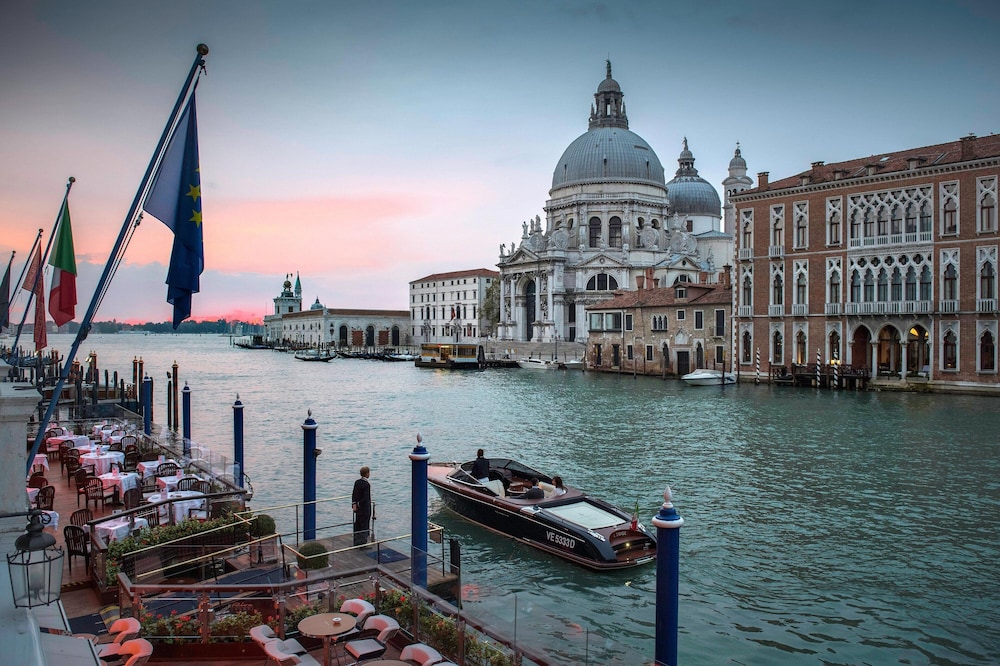
The Gritti Palace sits at the mouth of the canal with a terrace that looks straight across at Santa Maria della Salute, which is the single best hotel view in the city and not a close contest. The palazzo dates to the fifteenth century and the interiors were restored with an unusual amount of restraint. Ask for a room on the piano nobile, the first floor, where the ceilings are highest and the windows are the original arched ones. It is the most expensive of the six and the most formal in tone, which suits some trips and not others.
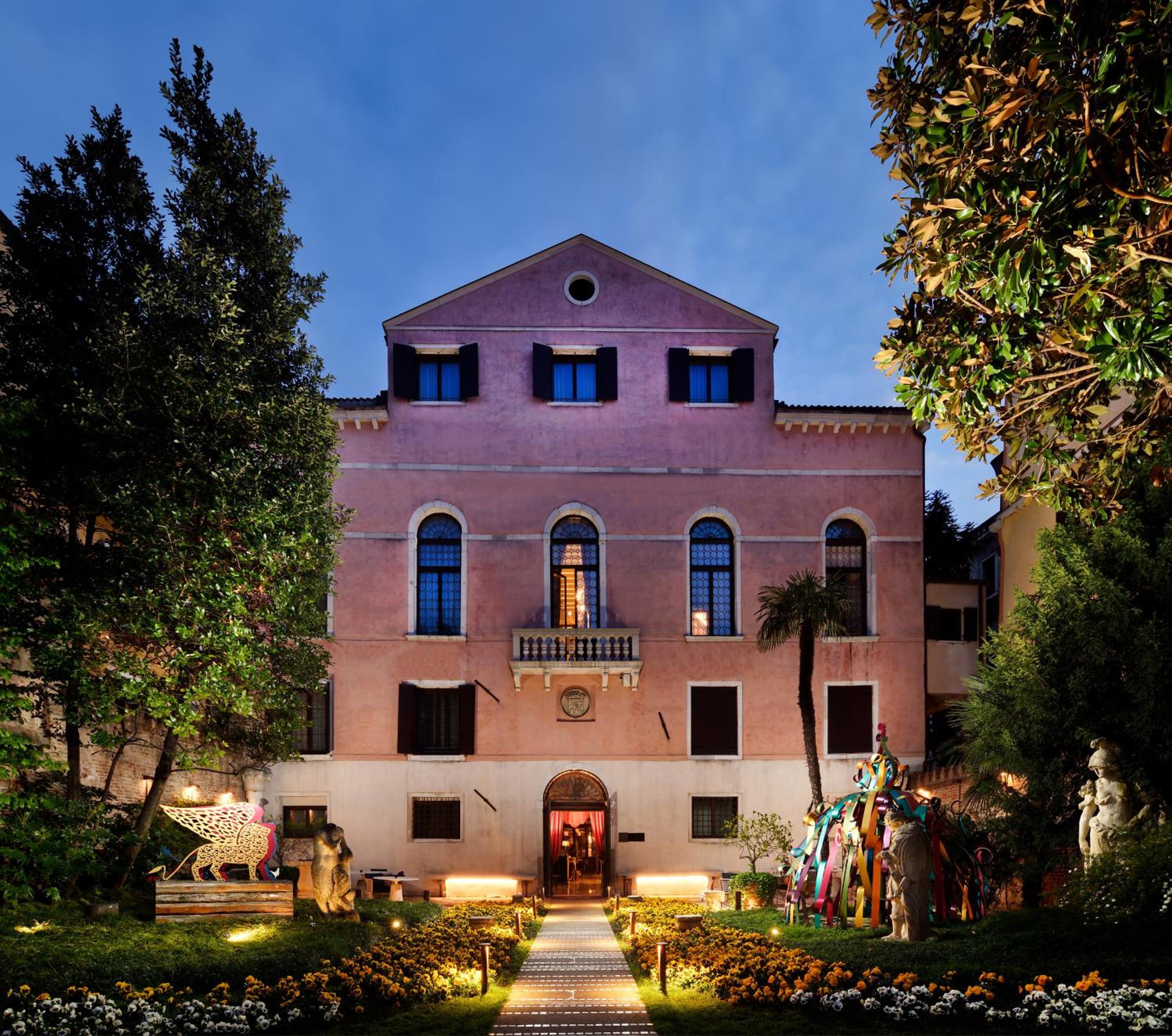
Aman Venice occupies a palazzo with two Tiepolo ceilings still in place and a private garden, which in Venice is close to unheard of. The scale is domestic rather than hotel-like, with a small number of rooms in a very large building, so it feels more like staying in a house than checking in anywhere. It also has one of the few pieces of open green space in the centre. The trade is that the service style is deliberately understated, which reads as discreet to some guests and as absent to others.
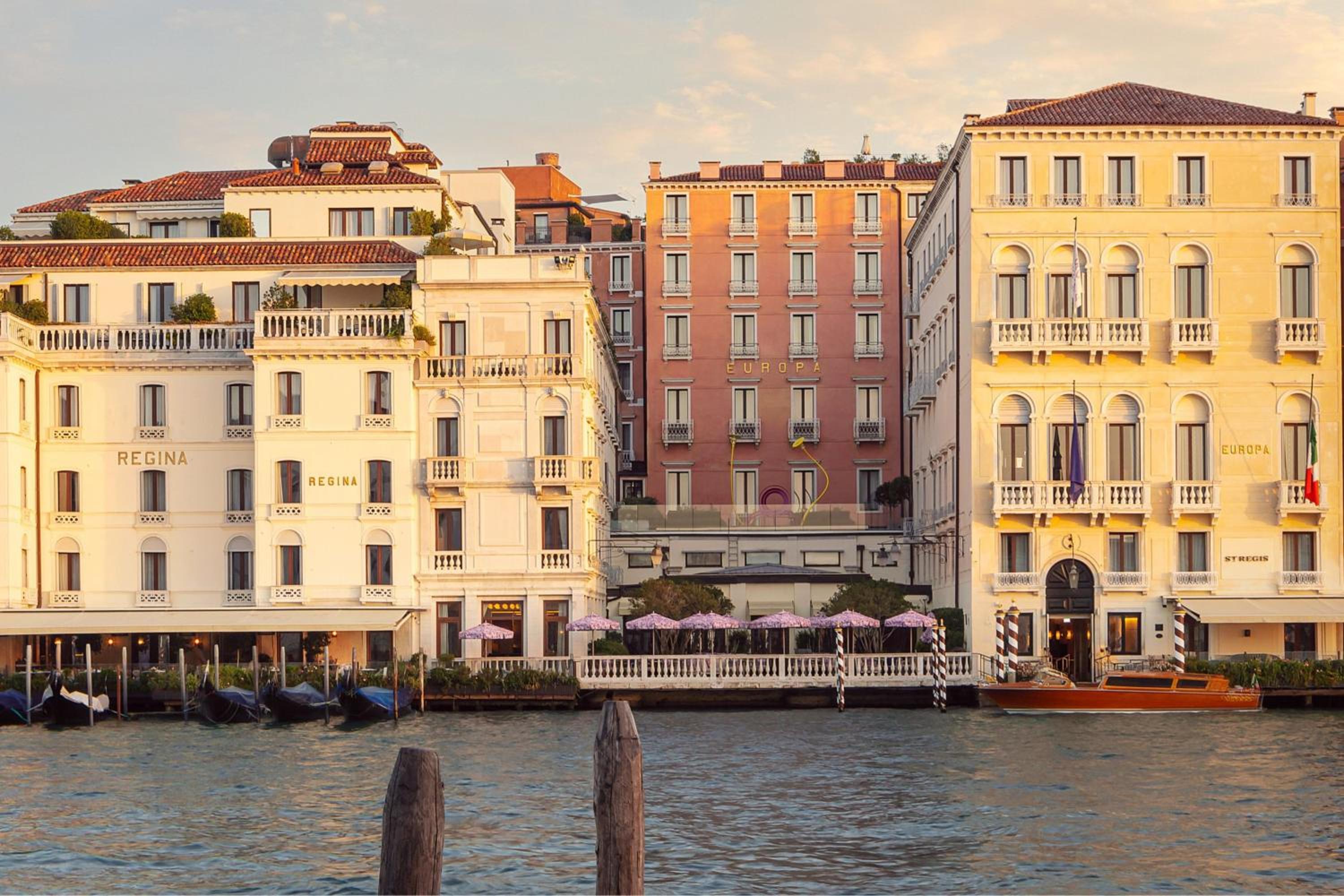
The St. Regis Venice has the most theatrical water arrival of the group, into a courtyard rather than a hallway, and a garden bar on the canal that is the best place in Venice to sit at six in the evening. Rooms are the most contemporary on this list, which is a relief if the gilt and damask of the older palazzi feels heavy. Request one of the canal-facing rooms in the newer wing rather than the historic block, which is quieter but faces inward.
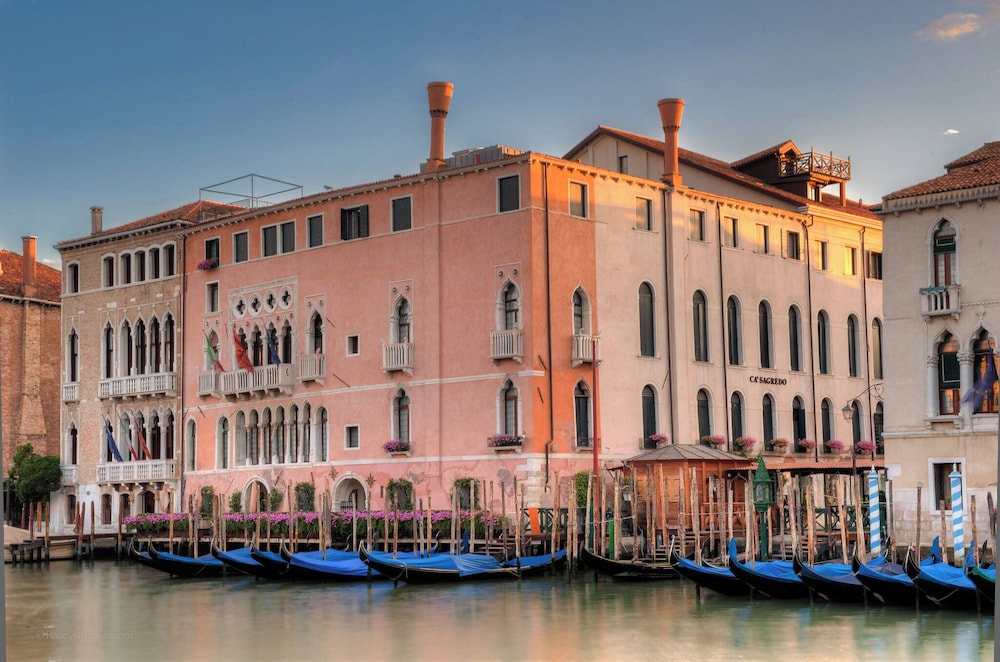
Ca' Sagredo Hotel is the most architecturally serious building here: a genuine merchant palace with an original staircase and a ballroom that most guests walk through without registering what it is. It sits opposite the Rialto fish market, so you get the market noise from five in the morning, which is either the best alarm clock in Italy or a problem. Ask for a canal room on an upper floor. It is a four-star in service terms and a five-star in setting.
Palazzo Venart Luxury Hotel sits further up the canal in Santa Croce, away from the crush, with a walled garden running down to the water. Being off the tourist axis is the whole point, and the walk to anything is longer, which the water door largely solves. The restaurant is better than it needs to be.
Across the water
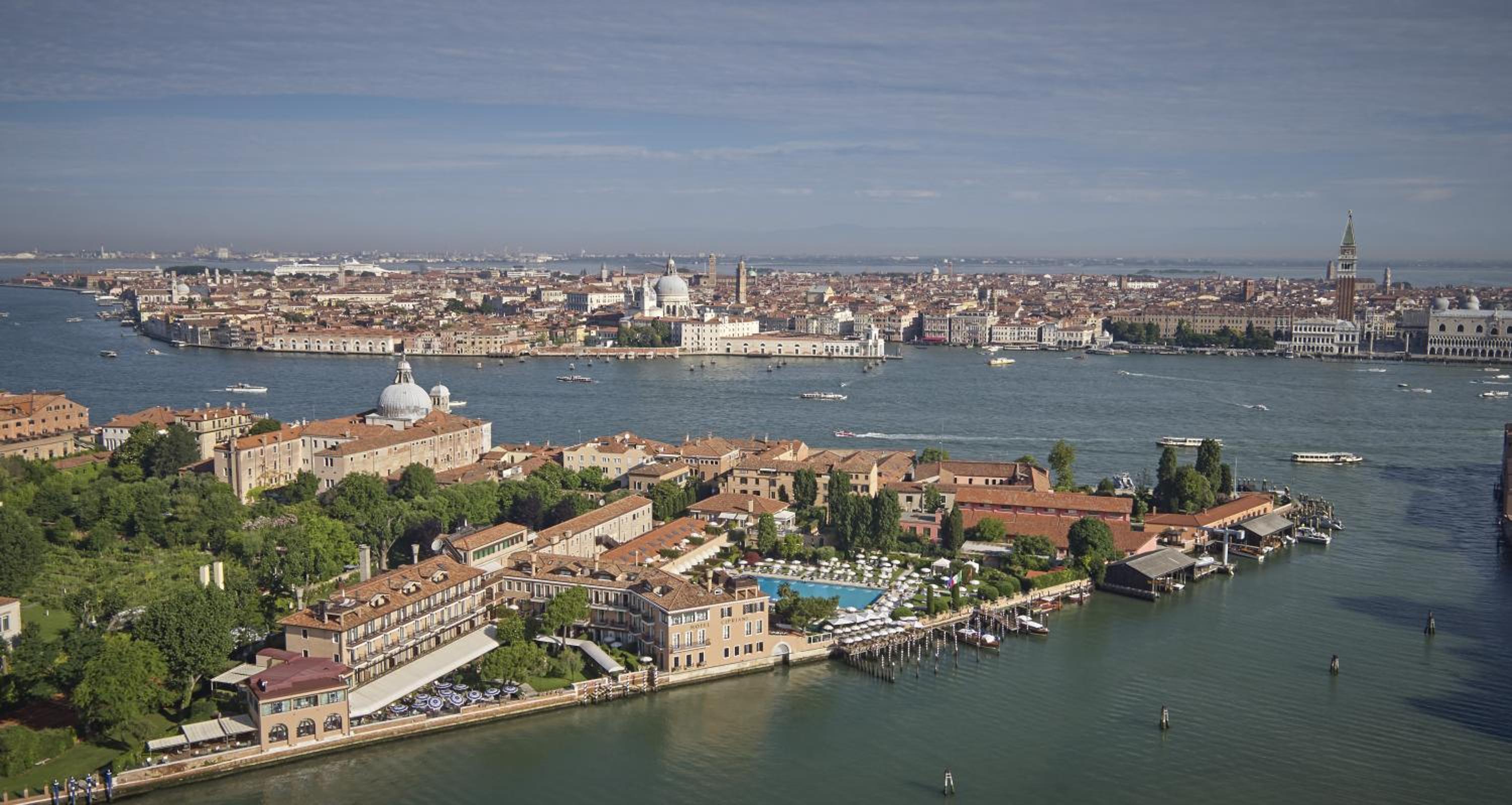
Belmond Hotel Cipriani is on Giudecca, which means it is only reachable by boat, and it runs its own launch around the clock. That sounds like an inconvenience and functions as the opposite: you get the entire San Marco skyline as a view rather than a destination, and you leave the crowds behind physically at the end of each day. It also has the only full-size swimming pool in central Venice and a genuine garden. The tradeoff is real: spontaneity is harder, and every trip out is a boat ride.
What we have left off
The grand hotels of the Lido are excluded deliberately. They have a beach, tennis and space that nothing in the centre can offer, and they are a twenty-minute ferry from Venice itself, which defeats the point of arriving by water.
What to do with the water access
Use it to go early and go far. The basilica and the Doge's Palace are worth the visit and unbearable between ten and four; a water taxi at half past seven gets you to San Marco while it is still empty and the light is coming off the lagoon sideways.
The islands are the reason to have a boat. Torcello, the oldest settlement in the lagoon, has a cathedral with eleventh-century mosaics and almost nobody in it. Most people give it an hour between Murano and Burano and it deserves a morning.
For food, stay off the main routes entirely. The bacari, the small wine bars serving cicchetti, cluster in Cannaregio along the Fondamenta della Misericordia and around the Rialto market on the San Polo side. Eat standing, order by pointing, and drink an ombra of white. Book a proper dinner only in Castello or Cannaregio, never within sight of the basilica.
Practical notes
Marco Polo airport connects by water. The shared Alilaguna service is inexpensive and slow, around ninety minutes. A private launch runs roughly 130 to 160 euros and takes half an hour, and this is the one transfer worth the money, particularly if your hotel has its own jetty to deliver you to.
April, May, September and October are the good months. July and August are hot, crowded and can smell. November through January brings acqua alta, the high water, which is atmospheric for a night and inconvenient for a week. Venice charges a day-tripper access fee on certain dates, which does not apply to overnight hotel guests.
Explore 4 & 5 Star Venice Hotels
Prices shown are sample rates from upcoming dates — not quotes for specific dates. Open a hotel and choose your own dates and guests to see the exact price.
Questions people actually ask
Is staying on the Grand Canal worth the premium?
Only if you get a canal-facing room. The internal rooms in these palazzi are unremarkable and cost nearly the same. If the canal room is out of budget, a smaller hotel with a water door in Cannaregio beats an interior room on the Grand Canal.
How many nights does Venice need?
Three, minimum. One is a day trip with luggage. Four or five lets you do the lagoon islands properly, which is where the city gets interesting.
Is Giudecca too far out?
Not if the hotel runs its own launch, which the one above does continuously. It adds a few minutes to every journey and removes the crowds from the end of every day. For a second or third trip to Venice it is the better choice.
Do you need a water taxi every day?
No. Once you are staying centrally, most of Venice is walkable and the vaporetto covers the rest for a few euros. The private boat matters most on arrival and departure, when you have bags.